Unikie brings 10+ years of demanding embedded software experience to Physical AI.
Artificial intelligence is rapidly moving into the physical world – machines, vehicles, and devices – where complex functions are performed locally and solutions must be lightning-fast while remaining safety-critical.
Physical AI represents a major transformation for industries that depend on real-time embedded systems – and it has been at the core of Unikie’s DNA from the very beginning.
Physical AI is the biggest transformation I can see in embedded development, dealing with hardware constraints, real-time behavior, and stronger security demands. In physical devices, failures can be expensive, dangerous, and hard to recover from. This is where Unikie’s expertise comes in.
Founder & CBO, Unikie

Physical AI makes machines, vehicles, devices and operations able to sense, decide and act in the real world. It must work under real-time, hardware, safety and security constraints. That is why it takes more than a model: it takes production-grade embedded engineering.
Built for embedded reality
The physical world introduces hard constraints: sensors are imperfect, compute and energy are finite, failures can be costly, and systems must be safe and secure by design.
Delivered by senior engineers
Unikie’s Forward Deployed Engineers work alongside your teams to turn complex ideas into systems that can be deployed and trusted.
Designed to become reusable
We turn our learnings into accelerators, building blocks and engineering knowledge that make the next project faster.
UnikieMind is our approach to Embedded and Physical AI.
Our Forward Deployed Engineers work alongside your team, combining AI-assisted engineering, optimization tools, reusable accelerators and more than 10,000 engineer-years of embedded knowledge.
Together, these capabilities move embedded products from idea through implementation, deployment and maintenance.
Our unmatched technical foundation in Physical AI and embedded systems, built and honed through hundreds of demanding safety-critical projects, is not easy to come by. We work with software-defined vehicles, intelligent drones, heavy machinery, edge nodes, and real-time sensoring – all fundamentals of Physical AI.

Autonomous vehicles
Creating smarter ways to innovate for the development, manufacturing and logistics of software-defined vehicles and autonomous fleets.
Intelligent Defence Systems
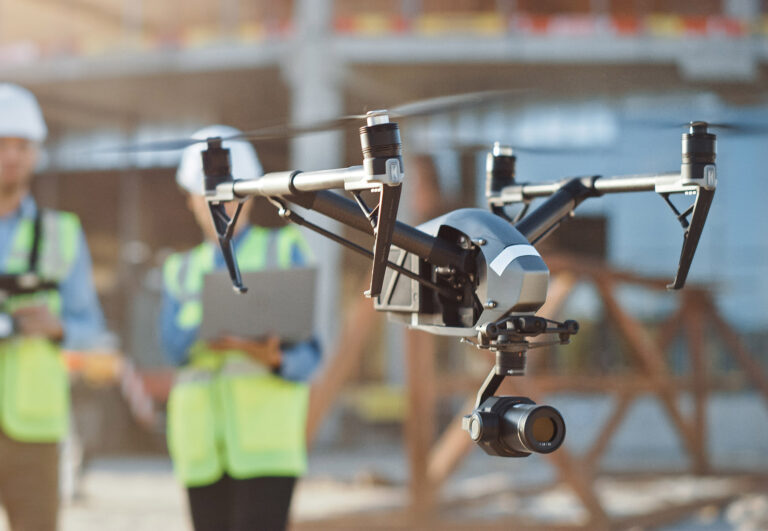
Delivering quantum-safe protection and resilience for autonomous systems and secure communications.

Next-gen Devices & networks
Developing intelligent, efficient, and secure platforms for optimal performance with real-time Physical AI.
Industrial AI & Robotics
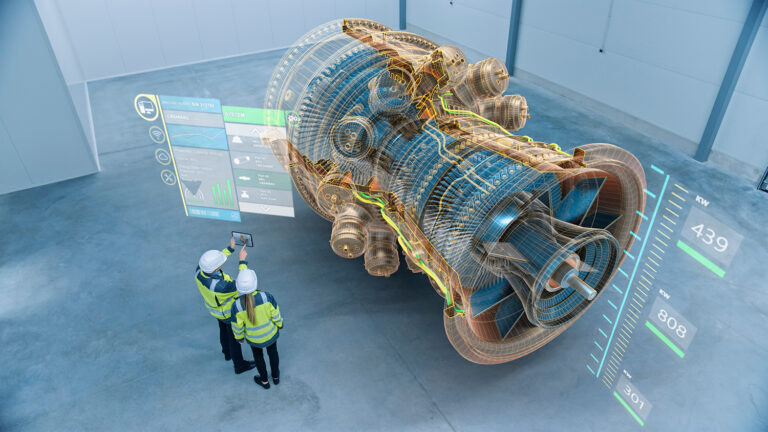
Bringing Physical AI into industrial solutions through real-time situational awareness and predictive & prescriptive capabilities.
For 10+ years, our engineers have developed core technologies that accelerate Physical AI, including sensor fusion, autonomous systems, and digital twins.
They are building blocks from UnikieMind’s knowledge foundation, bringing accumulated engineering knowledge into every customer-specific solution.
Perception stack
The perception stack enables a machine to see what’s around it. It covers the whole path from raw sensor input to a usable output. Intelligence in the stack synchronizes multiple sensors, so what the machine sees holds together as one consistent picture that applications can act on.
Drone Orchestration
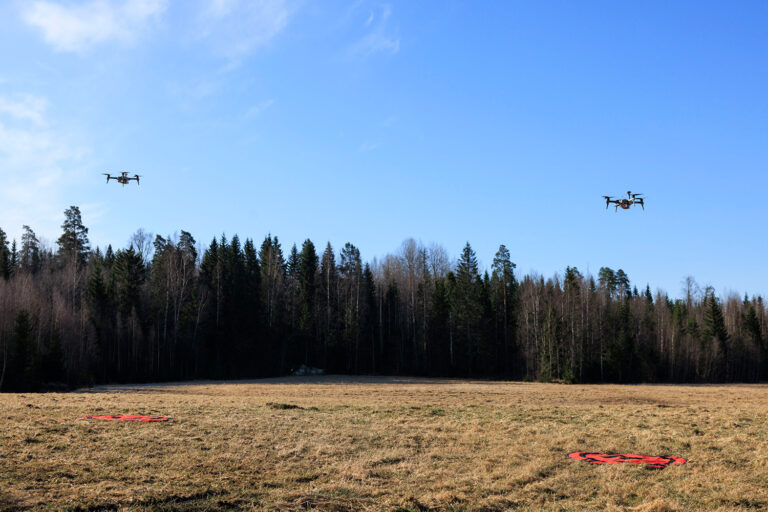
Unikie’s drone orchestrator is our AI-driven orchestration engine for autonomous drone operations. Built for defence and security operators and critical infrastructure owners, it changes a simple drone into a mission-ready asset.
Virtual Validation & Digital Twins
Unikie helps move validation off the machine and into software, so problems surface earlier and the field carries less of the cost and risk. This is especially valuable for programs with long validation cycles, safety obligations, and complex environments that are difficult to reproduce.
Semantic & Intelligent Models
Semantic models use ontologies to describe physical assets, processes, operating rules and the relationships between them. Intelligent models combine prediction, optimisation and decision logic for use cases such as predictive maintenance and production optimisation.
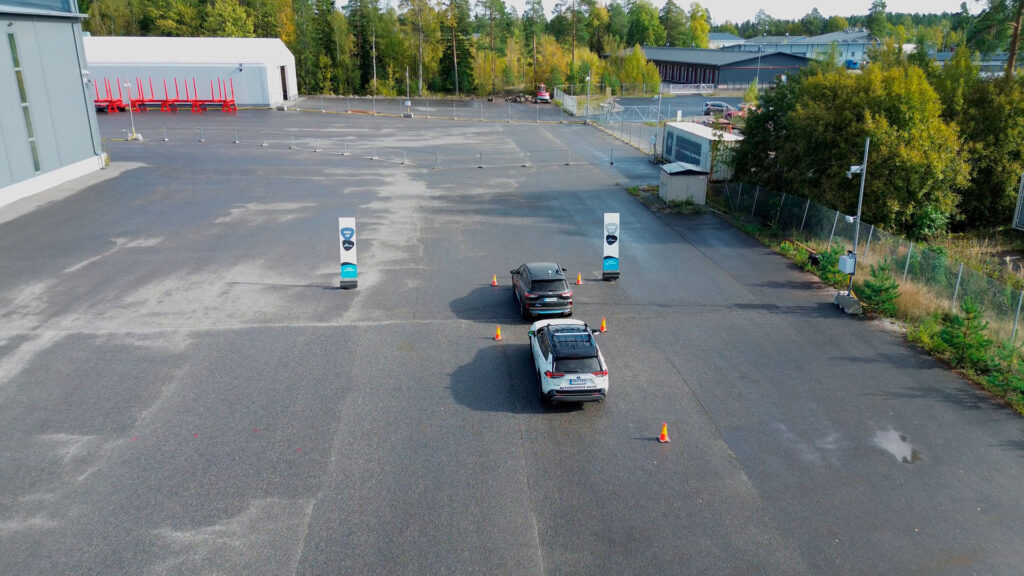
Unikie Marshalling Solution changes the strategies how vehicles are moved within car plants, bus depots and logistics yards, by completely automating driving and services – safely controlled by our infrastructure.
Physical AI refers to AI systems that operate in the real world, inside machines, vehicles, devices, and industrial environments, where decisions must happen locally and in real time.
Unikie develops Physical AI solutions by combining embedded software, sensing, autonomy, edge computing, and real-time intelligence to help physical systems sense, decide, and act safely and efficiently.
Physical AI can improve operations in automotive, logistics, defence, industrial automation, robotics, intelligent devices, and other safety-critical environments that rely on real-world performance.
Traditional AI often runs in the cloud and analyzes data after the fact, while Physical AI works directly in connected physical systems where fast, local, and reliable decisions are essential.
Physical AI makes embedded systems smarter, faster, and more autonomous by enabling real-time decision-making, better situational awareness, and improved performance in demanding environments.
Unikie has more than 10 years of experience in embedded software and safety-critical systems, helping companies turn Physical AI ideas into production-ready solutions that work in the real world.