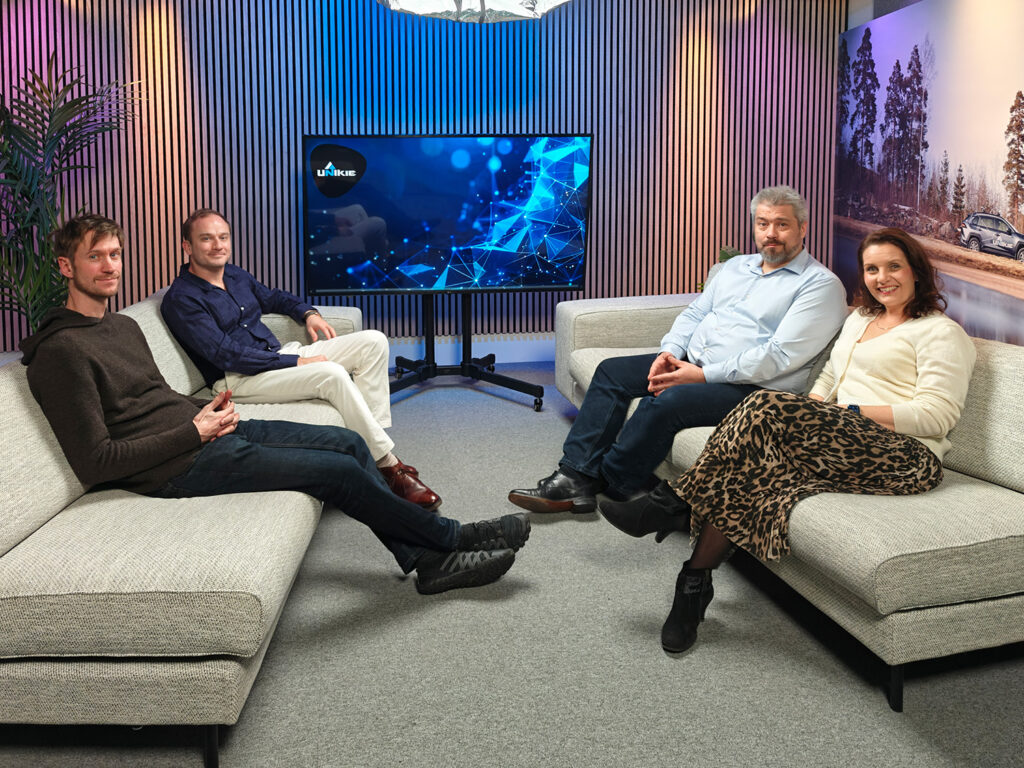
Unikie’s recent webinar Unikie AI Lab: AI-assisted Software Engineering took an expert look at how AI-assisted software engineering and optimization helps companies achieve faster performance, increased productivity, and cost efficiency across a wide range of devices and platforms.
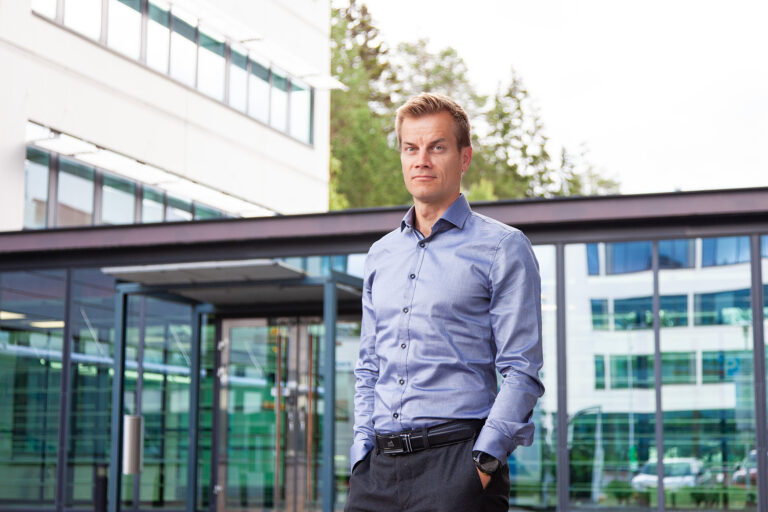
In the webinar, Unikie’s Principal AI Engineer Heikki Lehtosalo and CTO Niko Haatainen revealed the process of using AI and language models in software optimization.
A case example featured Grundium – a global leader in digital imaging for pathology – where Principal Engineer Matti Pellikka explained how AI-powered optimization can have a direct impact for the customer value and user experience for Grundium’s products.
Iterative Approach to AI-driven Software Optimization
In their expert talk, Niko Haatainen and Heikki Lehtosalo discussed the challenges – and opportunities – when using AI for optimizing the performance of parallel computing algorithms using CUDA.
Performance optimization is quite a different case compared to code generation, where AI is typically used the most. Optimization is all about understanding how hardware and algorithms work best together to increase the performance to the maximum level.
Optimization requires an iterative process, where AI agents repeat a loop of making changes, measuring and analyzing their impact and then planning the next set of changes to be tested. Depending on the case, achieving optimized results might require hundreds of iterations – a huge undertaking for a human expert, but a perfect task for a tireless AI agent.
As the capabilities of AI, language models, and agentic systems grow, the role of the human expert will evolve to a supervisor that observes and guides the AI’s work: setting goals for the optimization task while the AI does the heavy lifting.
All in all, the utilization of AI allows a major paradigm shift: instead of generic solutions, optimization can now be done with problem-specific solutions, reducing the need to make tradeoffs between generalization and optimization.
Case Grundium: Delivering Customer Value with Optimization
Grundium designs and manufactures digital microscope slide scanners that are used in pathology, laboratory sciences, research and education.
Grundium’s scanners are small footprint devices that produce gigapixel images, stitched together from up to thousands of individual digital images. For the professionals using the device, speed is of the essence – the processed image should be available as soon as possible.
Unikie has been working together with Grundium for optimizing the performance of image processing algorithms. In Grundium’s case, optimization is not a straightforward, predictable process – it involves a lot of trial and error, making it perfect for AI agents that can iterate tirelessly to discover the optimal performance gains.
As a result of Grundium’s and Unikie’s collaboration, the performance of one of the main algorithms in the processing pipeline has doubled in speed. For Grundium’s customers, this results in added value and better user experience to everyone using the scanners.
Unikie’s AI Lab Accelerates AI Adoption
From AI-powered software optimization to autonomous operations, AI-driven analytics, intelligent industry and edge AI, Unikie works on many fronts of AI development across industries.
Unikie’s AI Lab was established to accelerate the adoption of artificial intelligence by customer companies and expand the use of artificial intelligence in its own product development and business.
To learn more about Unikie’s AI offering and see actual case examples, see our services for AI & Data Analytics.