Unikie is a technology company specializing in embedded software and physical AI. As AI accelerates the software development lifecycle, a software consultant’s most valuable skill is not just technical competence. They need new ways of thinking and a deep ability to understand what is really happening in the client’s business.
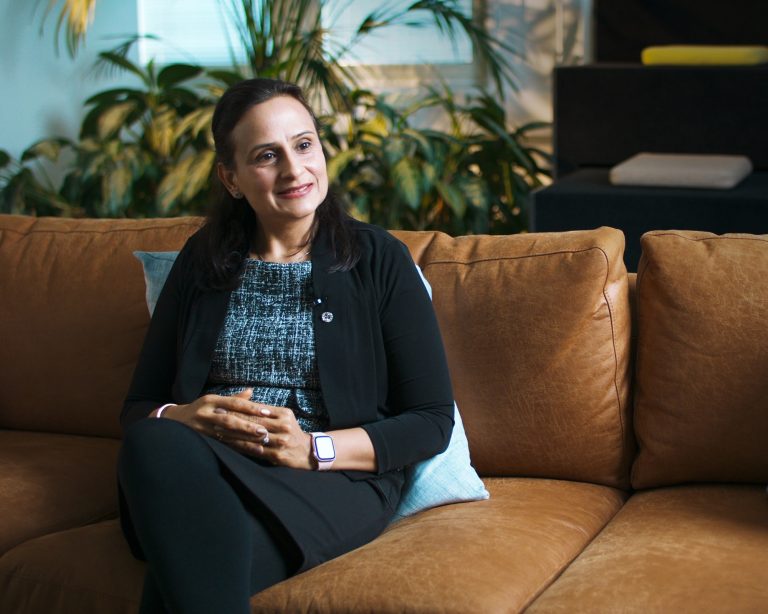
At Unikie, this change is brought into real life through the Forward Deployed Engineer (FDE) role. The term is still relatively new in Finland, but at Unikie several experts already work in that role. One of them is Senior AI Enablement Project Manager and FDE Ritu Mittal.
“For those who don’t work as an FDE, the role is sometimes hard to explain because the work always adapts to the client’s context. At its core, however, is working extremely close to the client’s systems and people. My task is to go to the client, see how the teams actually work, and identify bottlenecks and pain points in their daily lives,” Mittal describes.
A bridge builder between management and teams
In traditional consulting work, a consultant or team is often sent to the client to solve a predefined problem. FDE, on the other hand, enters a complex environment where the problem may not even be properly identified yet.
“The situation may look completely different at the management table than at the grassroots level in the team’s daily life. FDE’s most important and at the same time most demanding task is to combine these two perspectives. I need to understand the broader business context to propose solutions to management,” Mittal explains.
“But at the same time, it must be ensured that the AI tools adopted or developed genuinely make teams’ lives easier.”
From pain point to a testable solution in days
Once the pain point is identified, FDE does not stay planning a solution for months. Effective use of AI tools enables multiple ideas to be advanced simultaneously.
“FDE must quickly understand the shortcomings and build a testable solution within weeks or even days. It must be determined whether, for example, a particular AI agent genuinely creates added value. If it does, we continue working on it. If not, we abandon the idea and try something else.”
However, Mittal reminds that sometimes promising ideas proposed by AI are just the beginning. The biggest challenge lies in how the discovered solutions are integrated into the customer’s systems and processes. “The FDE model works best with customers who view AI tools positively and are ready to move toward AI-native development,” Mittal says.
Customer data stays with the customer, and lessons enrich the entire community
Unikie’s FDE model also builds on reusing the expertise gained in client work. When consultants leave client projects, valuable new expertise is returned with them.
“When we build, for example, AI agents for a client, we constantly think about how we can apply what we learn in future projects. Security and trust are, of course, absolute essentials here. We never take or reuse the client’s data,” Mittal emphasizes.
“Only the competence is transferred.”
FDE is a developer that analyzes business
Unikie’s Chief Human Resources Officer (CPO) Julia Karjalainen sees the FDE role as a natural continuation of how Unikie operates at the customer interface and at the forefront of technological development.
“In addition to the traditional developer role, FDE evaluates more deeply how the customer’s business benefits from artificial intelligence. The role combines the software developer’s technical expertise, the software architect’s overall vision, and the project manager’s ability to implement solutions in practice,” Karjalainen describes.
Unikie has recently launched the FDE learning path, which helps experienced developers expand their technical expertise toward broader customer and business understanding.
“Our experienced AI experts support their colleagues in the AI transformation. In addition to technological development, we strengthen, among other things, interaction skills. When AI manages routines, a person’s strength becomes the ability to ask, listen, and understand,” says Karjalainen.
Three cornerstones of working life in the AI era
From Karjalainen and Mittal’s thoughts, three themes can be highlighted that define Unikie’s attitude towards the AI transformation from the personnel’s perspective.
- Freedom to experiment with humans at the core: The best part of development is freedom and the joy of doing. When a developer has permission to experiment and has strong organizational support in the background, results come quickly, but technology never overrides humans.
- Well-being and human support: The employer must ensure that the ongoing transformation inspires, not distresses. If change or its impact on one’s own work makes you wonder, it is said out loud. No one is left alone.
- Combining experience and fresh AI nativeness: Seniors have an irreplaceable understanding of the industry and broad entities, while juniors and young talents can have a very natural, open-minded ability to utilize AI. When these two are paired, something big can be created.
See what it’s like to work at Unikie
This article was originally published in Finnish in Tekniikka & Talous.