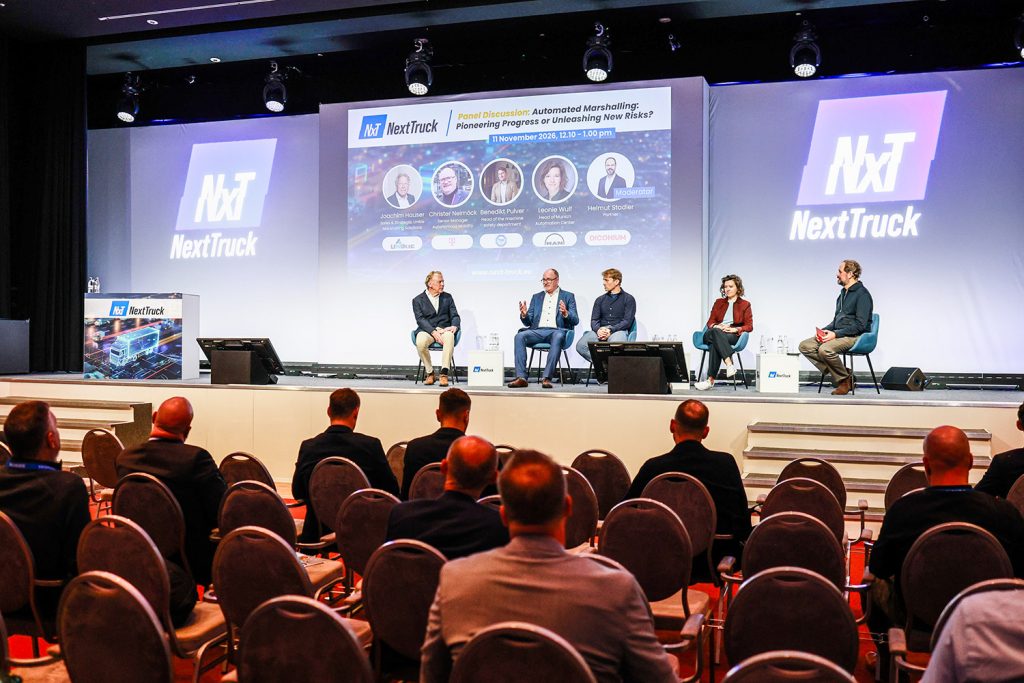
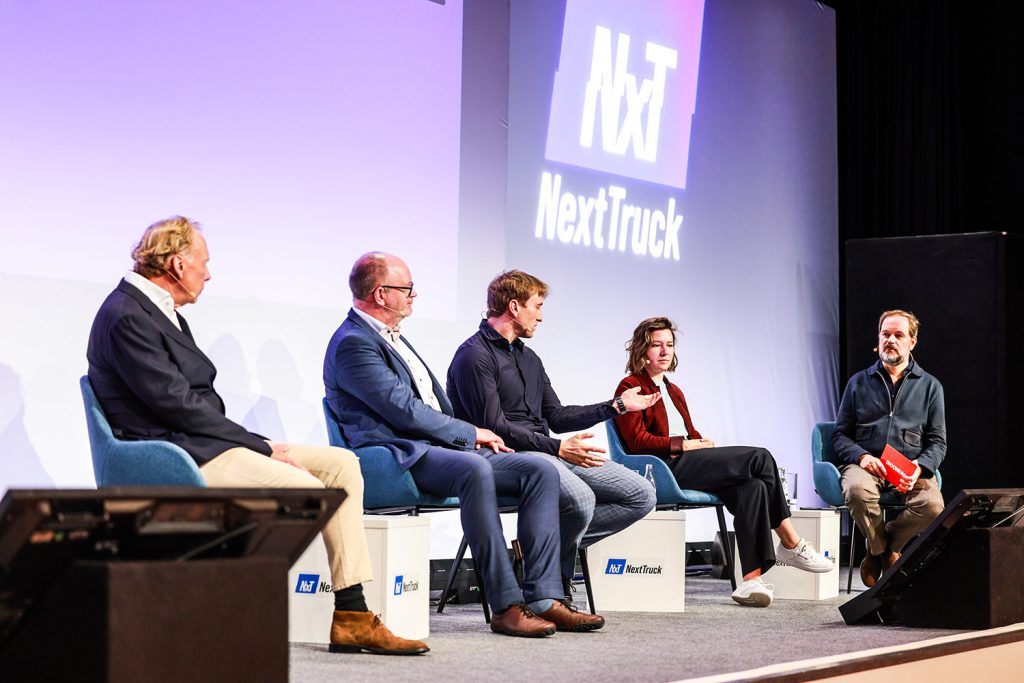
The panel’s discussion pointed out a shift in the market. Vehicle automation has matured, and customer interest is growing. But the next challenge is turning technical capability into an operational business case. That means looking beyond the vehicle’s ability to drive and asking how it can fit into the customer’s logistics flows.
The business case is in the flow
A vehicle that can maneuver itself is only one part of an automated operation. It must connect with the systems and processes that plan movements, manage the yard and coordinate what happens next.
That integration matters because logistics sites are built around constraints: available drivers, working hours, limited space and the number of vehicles that can move at once. Automation can change those constraints. Vehicles may be moved in parallel and outside traditional shifts, but operators still need to redesign their processes to make use of that flexibility.
The opportunity is not simply to automate a driving task. It is to rethink how vehicles move through the whole site from arrival and parking to charging, maintenance, loading or departure.
Safety must work in real conditions
A logistics yard is rarely a closed world. People, manually driven vehicles, automated vehicles and other equipment may all share the same space. For automation to be useful today, it must be designed for this mixed traffic rather than depending on a fully automated fleet arriving first.
The panel also discussed how safety responsibilities and technical choices evolve as automation advances. Artificial intelligence (AI) can support more adaptive systems, but it does not remove the need for sound safety engineering. Risk assessment, monitoring and appropriate redundancy remain essential, wherever the intelligence is located.
There is also a standards challenge. Harmonised standards may take time to develop, while technology and customer demand continue to move. The discussion highlighted the value of working with safety and certification experts as systems are developed and validated, instead of treating safety as a final step.
Open ecosystems enable scale
Most logistics operators work with vehicles from more than one manufacturer. Automated marshalling therefore needs to work across brands, with reliable interfaces between vehicles, infrastructure and site-management systems.
That makes collaboration central to progress. Vehicle manufacturers, connectivity providers, automation suppliers, logistics operators and safety specialists each contribute to part of the system. A panel example involving public 5G connectivity showed how partnerships can help connect those parts and support reliable operations across a site.
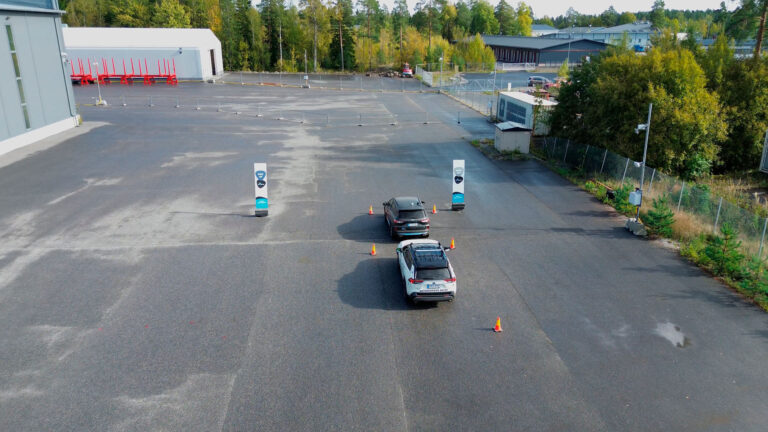
Unikie Marshalling Solution follows an infrastructure-based approach: sensors and edge computing provide a real-time view of the operating area, helping coordinate vehicle movements without relying on a single vehicle or sensor setup. This can give operators a practical path to introduce automation while existing vehicles and people continue to work on site. Learn more about Unikie Marshalling Solution.
Start where the operational need is clear
The panel discussed applications ranging from vehicle distribution and truck or bus depots to construction, agriculture, airports and other sites with frequent, repetitive movements. The environments differ, but the underlying question is similar: can automation improve the flow safely, and can it do so in a way that pays off for the operator?
That is why the starting point should be the operation itself. Understand the site, its traffic and its processes. Identify the movements that create the clearest value. Then build an automation path that can grow as the fleet, infrastructure and business needs evolve.
The next step in autonomy does not require waiting for every vehicle to be autonomous. It requires making today’s operations work better – one site, one process and one safely integrated movement at a time.
We are grateful for the opportunity to take part in the panel at NextTruck 2026, and we thank our fellow panelists for their valuable insights into marshalling!