Gated operational environments such as vehicle terminals, bus depots, logistics centers, industrial sites and ports are increasingly becoming a focus of automation. Wherever traffic routes are clearly defined, access is controlled and processes are repeatable, automated driving can already deliver practical value today.
In this environment, Unikie is a leading technology provider that sees automated vehicle marshalling not as a distant promise, but as an industrially applicable solution.
Automated driving where it already creates real value
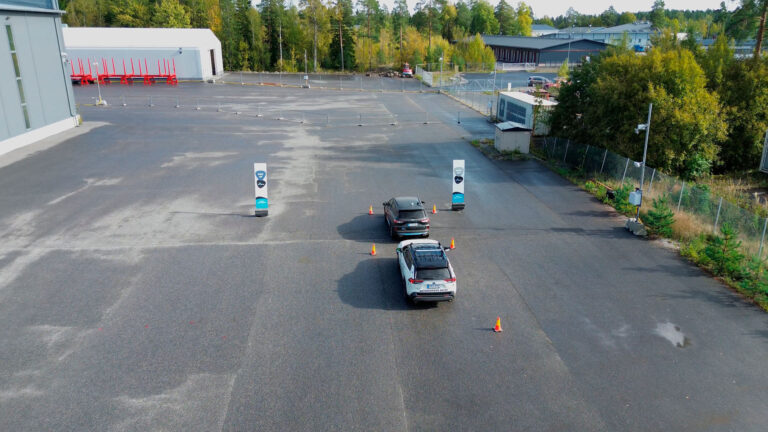
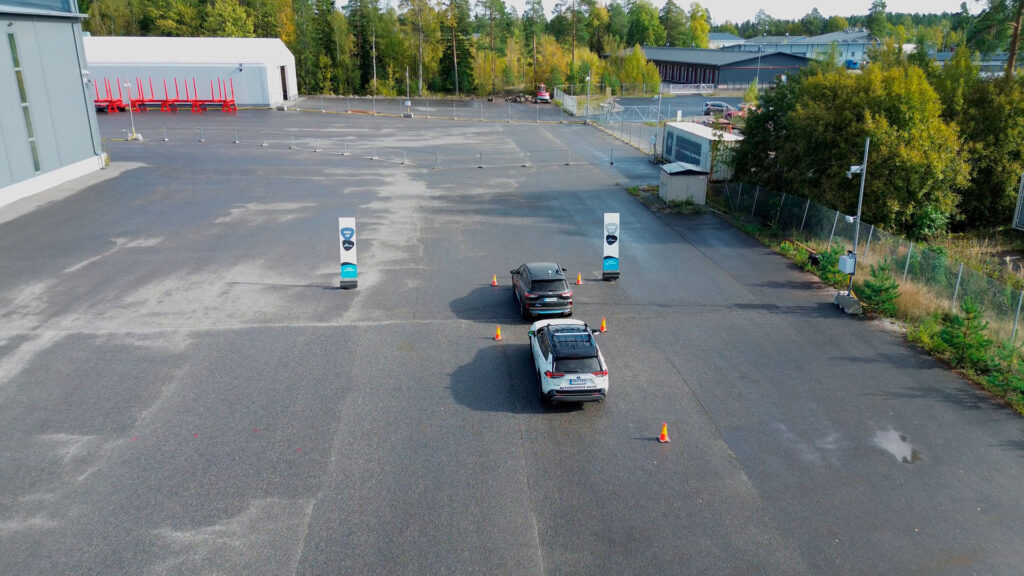
While fully autonomous driving on public roads still must overcome major regulatory, safety-related and infrastructural hurdles, gated areas offer a more realistic point of entry. Vehicles can be moved, dispatched, parked, or charged automatically. Unlike fully autonomous vehicles, which rely on individual vehicle-specific perception, automation in gated areas requires an area-wide real-time view. Infrastructure-based technology creates a complete digital view of the environment, enabling multiple automated vehicles to operate in parallel, even alongside manually driven vehicles and pedestrians. In combination with real-time traffic management, the solution will also be used by future autonomous vehicles.
The Unikie Marshalling Solution addresses precisely this point. The solution automates vehicle movements in defined operational areas and tackles challenges that many operators are already facing today: labour shortages, inefficient use of space, manual handovers, waiting times, safety risks and rising process costs. The focus is on applications that can be implemented step by step with existing vehicle platforms and established operational structures.
Trust is built through technology that can be understood
In safety-critical applications, acceptance is not determined by the level of innovation alone, but above all by how understandable and transparent the solution is. Operators need to know how vehicles are guided, monitored and safeguarded. Trust is therefore built through robust architecture, transparent processes, reliable operation and a partnership-based introduction.
Founded in Finland in 2015, Unikie draws on the country’s strong reputation in software, telecommunications and artificial intelligence. Backed by Finnish state-owned investment company Tesi and growth investor CapMan Growth, the company has also received the President of Finland’s Internationalisation Award for its global success. This Finnish engineering mindset is pragmatic and reliability-driven: solutions must perform continuously, in all conditions. It is especially relevant to automated driving in gated areas, where real progress depends on safe, transparent and scalable automation rather than distant visions.
Unikie combines software engineering, vehicle control, sensoring, perception, real-time processing, functional safety and AI into an integrated system approach. Automated driving is not treated as an isolated vehicle function, but as part of a digital operating process that connects planning, monitoring and execution.
Deployment in narrow, mixed and dynamic environments is particularly demanding. Vehicles must be reliably detected, movements planned and risks continuously assessed. To achieve this, the Unikie Marshalling Solution uses standard-based vehicle interfaces, wireless communication, sensors such as LiDAR, and Unikie-developed capabilities for machine perception, algorithms and edge computing. This enables vehicle movements to be centrally planned, monitored and executed in a controlled way. In the automotive industry, Unikie’s perception capabilities have earned enough trust to serve as a benchmark in vehicle testing.
Technology leadership through industrial scalability
Leadership in automated driving becomes visible above all when technology scales under real operating conditions. Unikie follows an approach that is not limited to individual demonstrations, but designed for repeatable, cross-site use across different industries. These include vehicle production, vehicle logistics, bus and tram depots, parcel and last-mile depots, port areas and specialized applications in demanding industrial environments.
The combination of automated vehicle control, a digital representation of the operating area and reliable connectivity is particularly relevant. In collaboration with industrial and technology partners, the solution can be integrated into existing IT, network and operational environments. This creates a scalable path from individual use cases to comprehensive automated vehicle logistics.
An important building block for this scalability is the close partnership with Deutsche Telekom. The collaboration combines Unikie’s software and automation expertise with the network, edge cloud and integration capabilities of one of Europe’s largest telecommunications providers. For automated driving in gated areas, this combination is central: vehicles, sensors, control rooms and steering systems must work together with very low latency, high availability and secure data transmission.
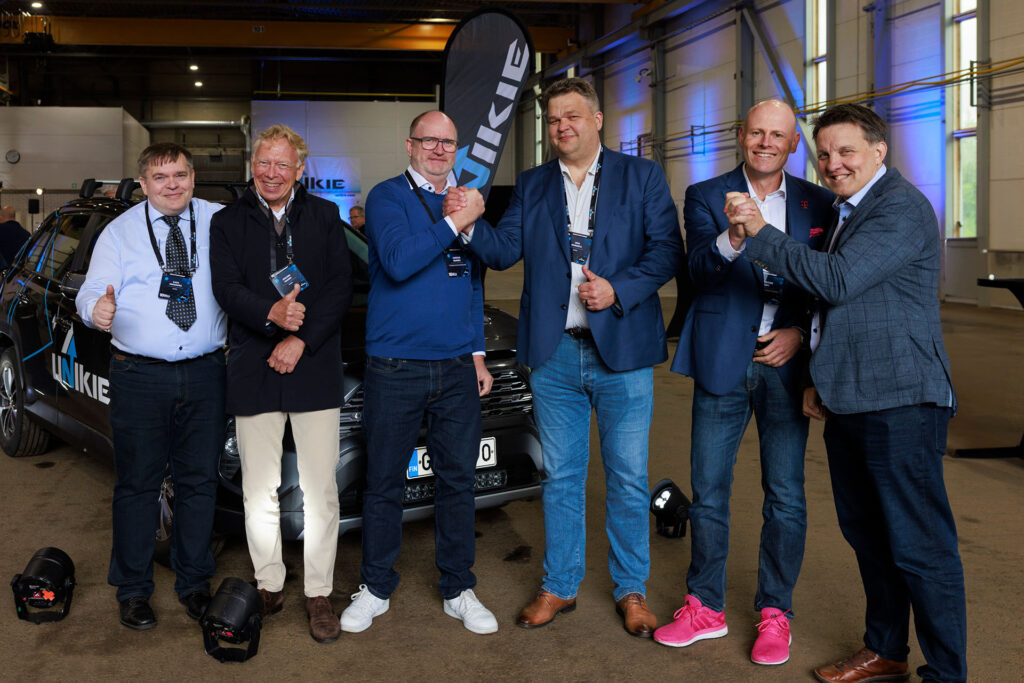
According to Deutsche Telekom, vehicles connect to the 5G network via SIM cards and communicate with the Unikie Marshalling Solution through this network. The solution can be operated in an edge cloud close to the deployment site, allowing data to be processed almost in real time. Complemented by T-Systems’ system integration capabilities, this creates an end-to-end approach that can support not only individual pilot projects, but also operations across multiple sites and industries.
For operators, it is crucial that automation is not understood as an isolated technology project. Its introduction must fit the workflows, spaces, vehicle types and safety requirements of each specific site. Unikie therefore focuses on customer-specific solutions that are tested together with partners before deployment and adapted to the concrete operating environment.
A clear business case for operators of gated areas
The economic value of automated marshalling processes does not come only from moving individual vehicles without drivers. Often, the indirect effects are decisive: vehicles can be coordinated and moved in parallel, processes can be optimized outside traditional working hours, parking and staging areas can be used more efficiently and waiting times can be reduced. At the same time, dependence on manual driving services decreases, while employees can focus more strongly on higher-value activities.
For electrified fleets, additional factors come into play. Automated vehicle movements can be linked with charging planning, parking management and operational optimization. Charging times can be better aligned with energy prices, vehicle availability and operating windows. In this way, automated driving becomes a lever for higher availability, better predictability and more sustainable use of existing infrastructure.
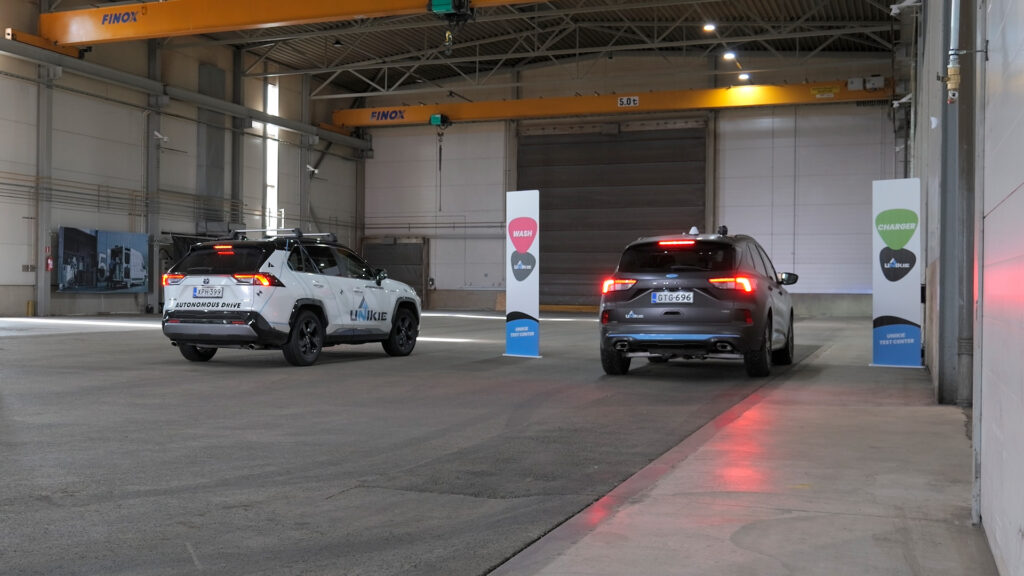
With over a decade of automated driving development, Unikie has delivered several real-world implementations with leading automotive and heavy vehicle manufacturers, including plant marshalling with Ford, automated vehicle logistics with Volkswagen, bus depot marshalling with Scania, and an industrial transportation solution with Mantsinen.
Safety as a foundation, not an add-on
In gated areas, automated vehicles often operate alongside people, manually driven vehicles, changing obstacles and confined traffic spaces. Safety must therefore be part of the system architecture from the outset. The Unikie Marshalling Solution addresses these requirements through environment perception, secured real-time data processing and higher-level control mechanisms that continuously check movement planning and vehicle guidance for plausibility. Cybersecurity also plays a central role when data is transmitted between infrastructure, systems and vehicles.
This safety approach is one key reason why operators can regard Unikie as a reliable partner. The technology aims to make automated vehicle movements understandable, repeatable and controllable even in complex operating environments. Safety is therefore not traded off against efficiency but becomes a prerequisite for productive automation.
Why functional safety is the cornerstone for automation?
From pilot projects to industrial transformation
The market for automated driving in gated areas is increasingly moving away from isolated pilot projects toward industrial transformation programs. Operators are not only looking for technology, but for partners that reduce complexity, enable integration and support long-term operational reliability. The partnership with Deutsche Telekom reinforces precisely this ambition: it shows that automated marshalling is not only a matter of vehicle control, but also of network architecture, data flows, edge infrastructure, cybersecurity and industrial operational stability.
To drive the transformation in the automotive and logistics industries, Unikie participates in various working groups for the German Association of the Automotive Industry (VDA) and logistics association Bundesvereinigung Logistik (BVL). These organizations have major influence in where the industry is heading and even how European legislation is developed. In addition, Unikie is involved in the Autolog project where Unikie partners with Volkswagen, Deutsche Telekom and BIBA to enable fully automated driving in automotive seaports and compounds around the world.
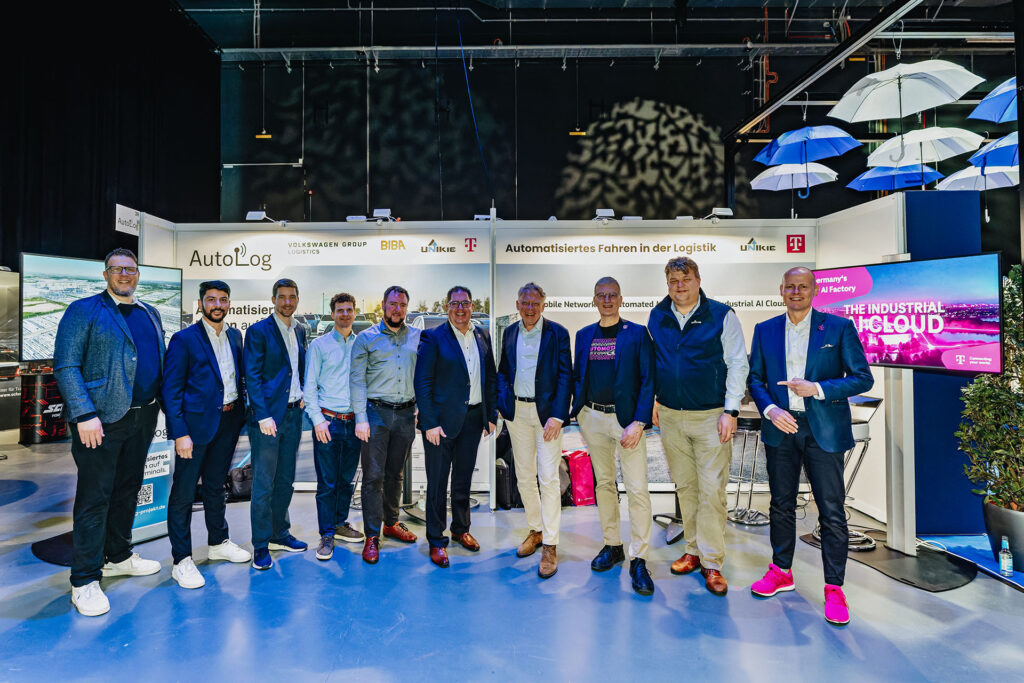
By combining technical expertise, proven applications, scalable architecture and strong partnerships, Unikie demonstrates how software, connectivity, edge computing and system integration can form a production-ready industrial solution. For companies aiming to make their sites safer, more efficient and future-ready, automated marshalling offers a concrete step toward digitalized vehicle logistics.
Conclusion
The Unikie Marshalling Solution represents a pragmatic approach to automated driving: reliable, scalable, and focused on industrial feasibility. In gated operational environments, this technology can already create measurable value today. That is why automated marshalling is evolving from a future topic into a concrete building block of modern vehicle logistics.
Author

Joachim Hauser was an executive at BMW AG before he joined Unikie. With experience in auto-industry and especially in automated driving, together with Unikie management he formed the way for entering the market. Today Joachim Hauser is in charge of strategy and sales of Unikie Marshalling.