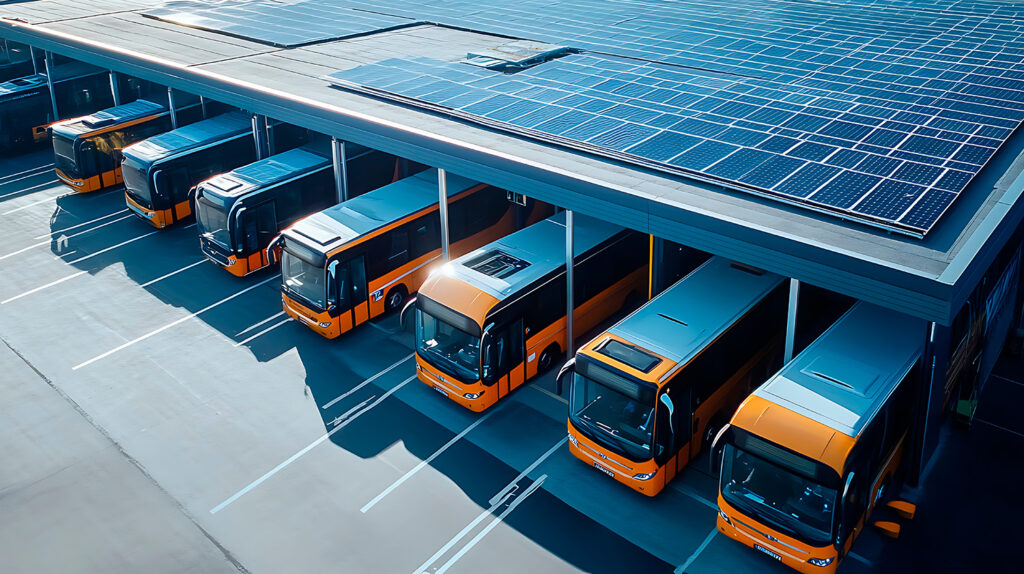
Public transport operators are under increasing pressure. Driver shortages, electrification, and rising operational complexity are making traditional depot operations harder to manage and less efficient.
The solution is already available.
Unikie, together with Peak Mobility, is enabling a new generation of depot operations where vehicle movement is fully automated, and logistics are dynamically optimized in real time.
Unikie has partnered with Peak Mobility, formerly known as PSI Transcom, to fully automate bus depots. Peak Mobility’s depot management system digitizes and automates depot operations, while Unikie’s Marshalling Solution manages driverless movements. The companies showcased the automated depot for the first time in 2024.
From Manual Operations to Autonomous Execution
Today’s depots still rely heavily on manual vehicle movements. Drivers spend valuable time on non-productive tasks, and operations often depend on coordination delays.
With Unikie’s Automated Marshalling Solution, this changes fundamentally.
Vehicle movements within the depot are executed autonomously. Buses drive themselves between parking, charging, maintenance, and washing – with increased safety and without human intervention. The system connects directly with the depot management system, turning digital plans into real-world execution instantly.
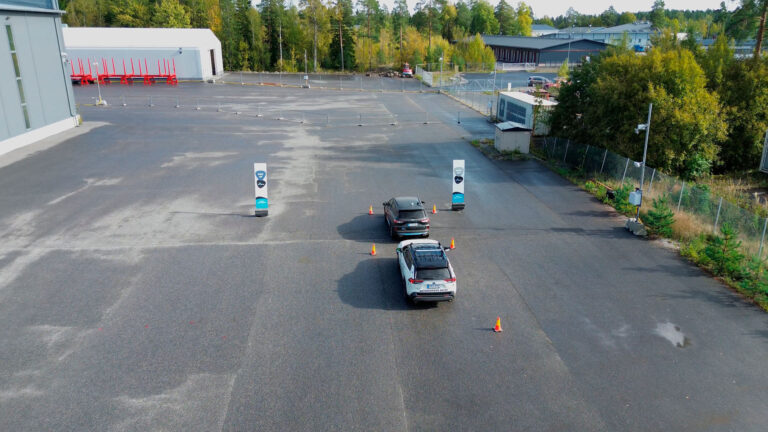
A key enabler is Unikie’s infrastructure-based approach. LiDAR sensors placed in the depot environment create a real-time digital twin, allowing centralized control of all vehicles. This means buses do not require onboard sensor systems to operate autonomously.
Automation That Works Today
One of the clearest messages from the joint Unikie and Peak Mobility webinar series was simple: the automation solution is already applicable today.
The integration between Unikie Marshalling Solution and Peak Mobility’s Depot Management System enables:
- Fully automated driving missions inside the depot
- Real-time vehicle tracking and control
- Immediate execution of operational decisions
At the same time, bus manufacturers are preparing marshalling-ready vehicles, making this the ideal moment to start pilots and system design. With drive-by-wire capability and standard mobile connectivity, buses are already equipped for automation. Retrofit solutions are also emerging, enabling existing fleets to join the transition.
From Static Processes to Intelligent Operations
Automation is not only about increasing efficiency – it is about reinventing depot logistics.
Soon, AI agents will represent both vehicles and depot services. Buses will negotiate optimal schedules for charging, parking, and maintenance in real time, interacting dynamically with depot infrastructure.
This creates a fundamentally new operating model:
- No waiting times or manual coordination
- Real-time, situational decision-making
- Maximum utilization of depot resources
A Proven Business Case
The impact of automated marshalling is both immediate and measurable.
Operators can significantly reduce non-productive driver work, eliminate vehicle damages caused by human error, and optimize depot space and infrastructure usage. As automation scales, these benefits increase directly.
Typical deployments show strong financial performance, with a clear return on investment within a few years – while also addressing challenges such as driver shortages that are difficult to solve otherwise.
A Transformation Already Underway
The journey from traditional to automated depot operations is not a single step, but a transformation. It involves new processes, new capabilities, and new ways of thinking about logistics.
However, the foundation is already in place.
Unikie’s automated marshalling, combined with Peak Mobility’s depot management expertise, provides a ready-to-deploy solution for fully automated depot operations today.
Automated marshalling is not the future of bus depots. It is the present – and it is redefining how operations are executed.
Webinar Series: The Automated Bus Depot
In spring 2026, Unikie and Peak Mobility hosted a two-part webinar series designed to support operators, consultants, and OEMs in bus depot automation. In Part 1, we focus on depot planning and the technical and operational prerequisites. In Part 2, we move from planning to deployment, taking a look into the installation and operation of the depot, as well as building a business case for the automated depot.
Author

Joachim Hauser was an executive at BMW AG before he joined Unikie. With experience in auto-industry and especially in automated driving, together with Unikie management he formed the way for entering the market. Today Joachim Hauser is in charge of strategy and sales of Unikie Marshalling.